Method and questions of the sleep study
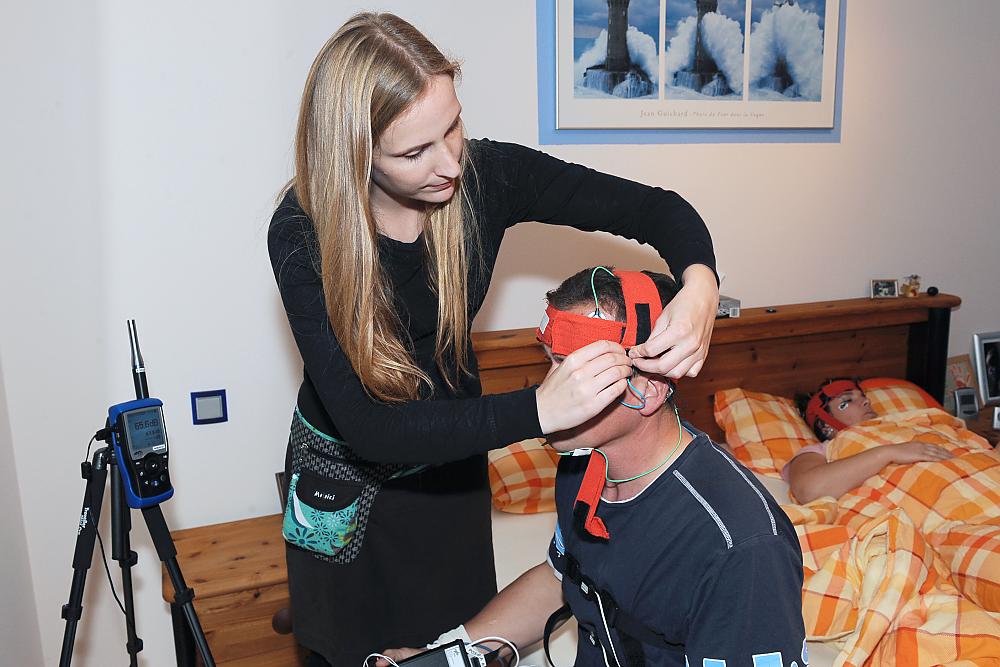
The results of the NORAH Sleep Study show for the first time in detail how well people with otherwise healthy sleeping habits in the Rhine-Main Region sleep, and how aviation Noise affects their nightly rest. The first sleep measurements were carried out in 2011 before the curfew on scheduled flights between 11 pm and 5 am came into effect. All of the participants went to bed between 10 and 10.30 pm, and got up between 6 and 6.30 am. The second measurement phase took place in 2012. In this year, almost all of the participants from the previous year took part again. In 2012 the NORAH team also investigated another group of persons who went to bed an hour later, i.e. between 11 and 11.30 pm, and also got up an hour later in the morning. Comparison of the two groups allowed the NORAH team to estimate how the six-hour night flight curfew affected the sleep of the residents, and whether when the participants went to bed and got up again made any difference in the second year.
Early sleepers benefit from the flight curfew between 11 pm and 5 am
Due to the lower number of overflights in 2012, study participants who went to bed between 10 and 10.30 pm slept better in the second year of the investigation. In 2011 they awoke additionally on average 2.0 times per night at the time of an overflight (“aviation noise-associated Wake-up reaction”). In 2012, however, they woke up additionally on average only 0.8 times per night due to overflights.
Late sleepers wake up more frequently
The second group of participants in 2012, who went to bed between 11 and 11.30 pm and got up an hour later in the morning than the “early sleepers”, woke up more frequently. On average 1.9 times per night they experienced an “aviation noise-associated wake-up reaction”, i.e. an interruption of their sleep during an overflight. The reason for the clear difference between early and late sleepers: the getting up time of the late sleepers was around two hours after the end of the curfew on scheduled flights. This meant that the people were exposed for longer to the resuming air traffic in the early morning.
Not every overflight causes the same degree of disturbance
How the participants slept
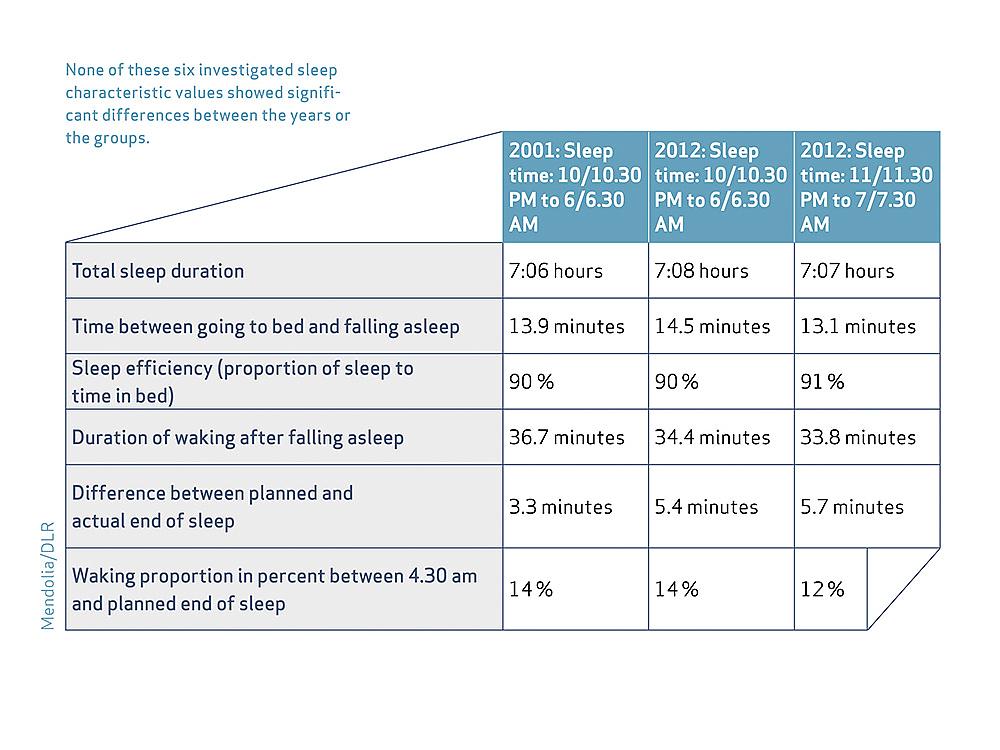
Despite the different noise exposure in the years 2011 and 2012, the scientists were unable to establish any significant differences in various sleep characteristic values between the two years. In order to track down possible effects of nocturnal aviation noise, the NORAH team had measured, among other things, how long the participants lay awake at night and how long they needed to fall asleep. In none of the investigated sleep characteristic values (see table) were the scientists able to establish any statistically significant differences between the years and groups. Here an overview of the average values:
People with a more critical attitude towards air traffic sleep less well
The NORAH team also asked the participants how positively or negatively they viewed air traffic, and how necessary they believe it is. The answers hardly changed over the course of the three investigation years. However, in all three years the scientists were able to establish a connection between the sleep of the participants and their attitude towards air traffic: residents with a more negative attitude towards the airport needed longer to fall asleep, spent less time in deep sleep, and lay awake at night for longer. The scientists were unable to draw any conclusions from the data as to cause and effect: the negative attitude could be a result of the poor sleep, but it is also possible that the negative attitude could be the cause for poor sleep.
Measurement of physical reactions to noise changes
The term “wake-up reaction”
In the years 2011 and 2012 the study examined how probable it is that the participants displayed a so-called wake-up reaction due to the influence of aviation noise. This is what the scientists call the change from a deeper sleep phase either to the lightest sleeping phase or waking up. Wake-up reactions are caused not only by noise. Even in a quiet environment, sleepers will wake up several times in the night. Usually they cannot remember this in the morning. In previous studies in the Sleep lab, the NORAH team was able to demonstrate that people generally only remember wake-up reactions if they last for longer than 90 seconds.