
Not every overflight causes the same degree of disturbance
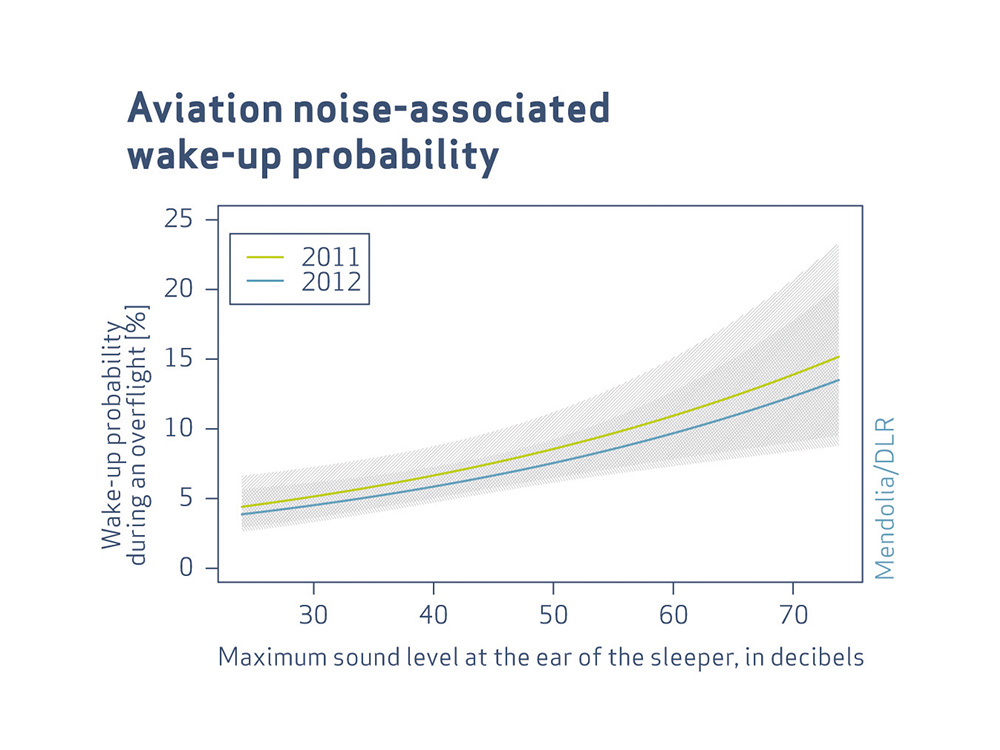
The graph shows the probability of waking up during an overflight with a certain maximum Sound level. The wake-up probabilities for 2011 and 2011 are not significantly different (L Glossary). This is apparent from the strong overlap of the shaded “confidence intervals”.
Most of the overflights did not cause the sleepers to wake up. The NORAH team wanted to know more exactly whether some overflights disturbed sleep more than others. To do this they analyzed, among other things, the maximum sound level, i.e. the maximum Loudness of each overflight, and the time. They found out – unsurprisingly – that louder overflights lead to more frequent wake-ups. However, the difference between the general background noises and the maximum sound level of the overflight also played a role: if the background noises were louder and the difference to the overflight Noise therefore less, the participants woke up less frequently. The time also plays a role: towards the end of the night, when the sleep pressure decreased, the participants were more likely to wake up than at the start of the night.