
Measurement of physical reactions to noise changes
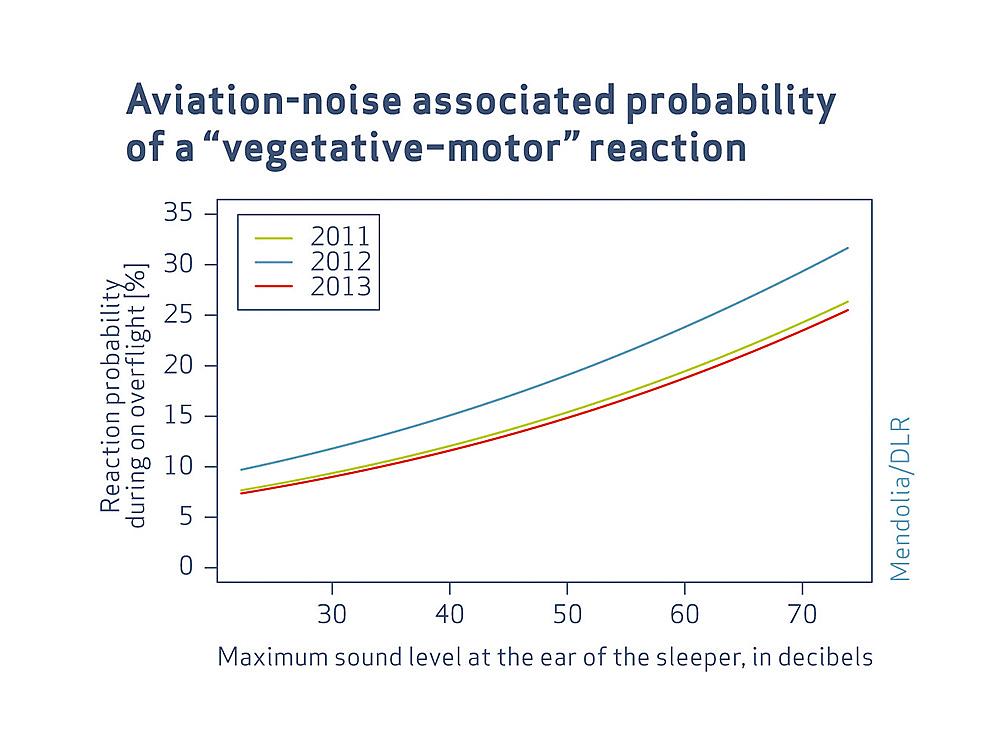
The graph shows the probability of reacting with increased heartbeat and body movements during an overflight with a certain maximum Sound level. The reaction probability increased from 2011 to 2012, and then fell back in 2013 to the level of 2011.
In 2013, the third year of the investigation, the scientists used a less complicated measurement method with just two Electrodes: this registers how frequently the participants react physically to overflights – with accelerated heartbeat and body movements. Unlike the polysomnographic investigations of the previous years, the participants were able to attach the two necessary electrodes in the evening themselves. This meant that, with the same budget, the NORAH team could measure the sleep of considerably more persons than in 2011 and 2012.
The results show that the physical reactions to overflights increased substantially from 2011 to 2012: in 2011 the participants reacted to 10.7 percent of the overflights with no interference from other Noise, in 2012 to 16.2 percent. In 2013 the proportion was 13 percent, i.e. it had fallen back again. The scientists cannot rule out that this may have to do with what is called a Change Effect. This is what noise impact researchers call it when people temporarily react more strongly to expected or actual noise changes, for example after the expansion of an airport.