
Changed noise background
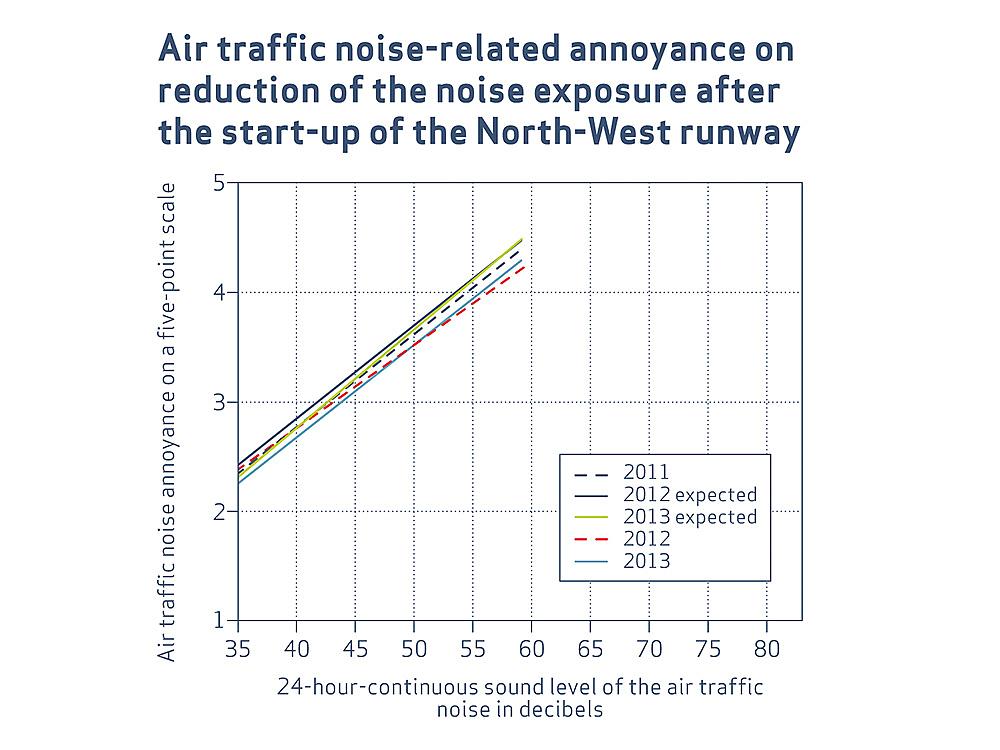
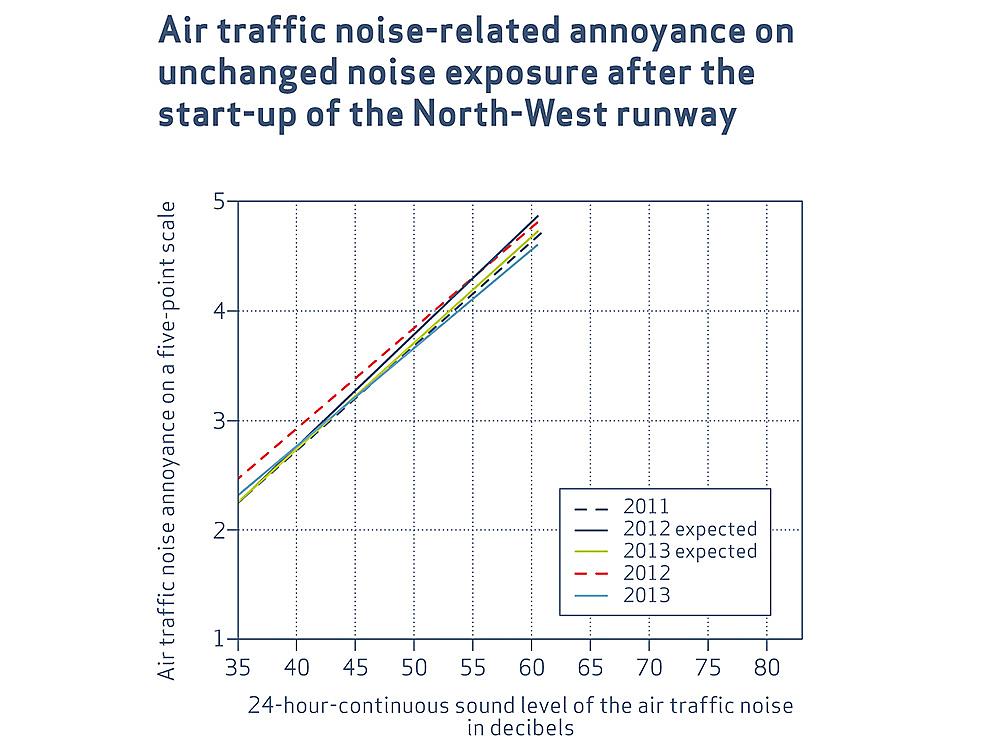
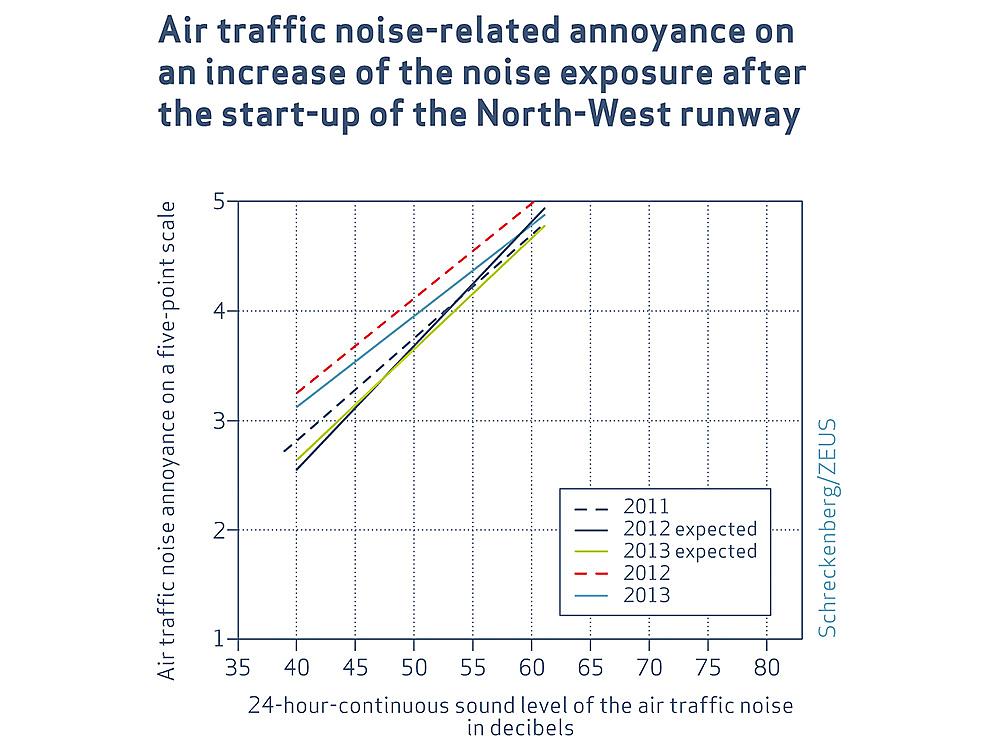
The NORAH team also wanted to know whether the changed Noise exposure in the Rhine-Main region had led to a Change Effect.For this purpose they divided the study participants into three groups. In one group the Continuous sound level had decreased between the surveys, in the second group it had stayed the same, and in the third group it had increased. The scientists then looked at the average annoyance for each group.
The result:
- In persons, at whose address the noise decreased from one year to the next, the NORAH team was able to establish a positive change effect. In these persons the annoyance was reduced to a somewhat greater degree than the actual reduction in air Traffic noise would have suggested.
- In the study participants whose noise exposure had remained the same, a slight negative change effect was observed: although nothing had changed compared with 2011, in 2012 the persons concerned felt somewhat more annoyed. In 2013 the annoyance fell again to some extent.
- A more pronounced change effect occurred in persons at whose addresses the noise had actually increased. They felt more annoyed by the new Sound level than people who had already been exposed to similar noise levels for years.
The change effect
When people believe that it is going to get louder in their environment, or when the noise levels actually do increase, then they feel disproportionately more annoyed by noise – experts call this a (negative) change effect. The change effect, however, also works in reverse: when people believe that the noise will be reduced due to measures taken, or when the noise is actually reduced, then they feel less annoyed than would have been expected on the basis of the reduction in noise ("positive change effect").